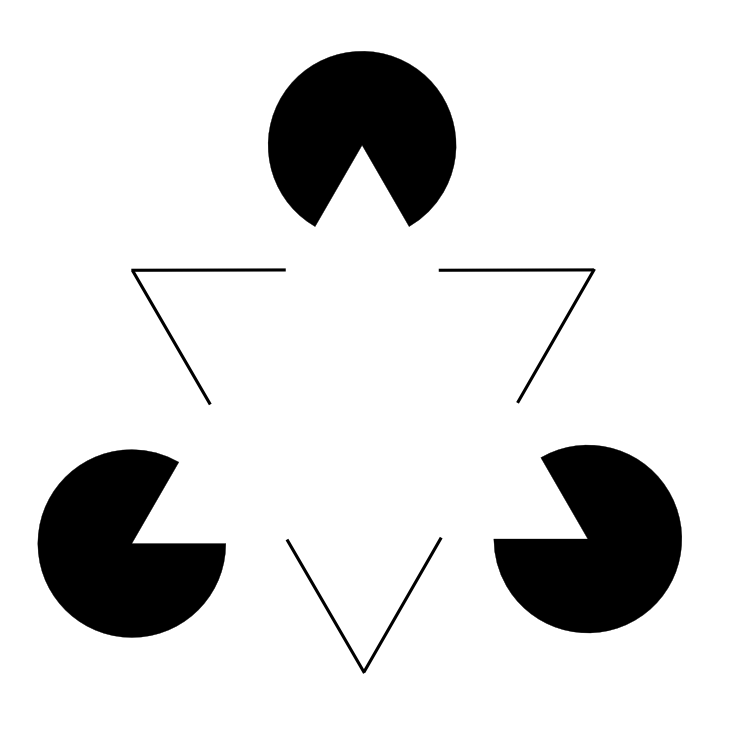
Truth cannot be spoken, only witnessed. That idea appears, independently, across an extraordinary range of traditions — as if human beings keep arriving at the same wall from different directions.
What is Truth?
Pilate asked the question standing directly in front of the one who had already answered it.
In John 14, Jesus says: I am the way, the truth, and the life. Four chapters later, during the trial, Pilate asks: what is truth? Then walks away without waiting for a response. He poses the question to the answer and leaves before the answer can speak.
It is one of the most haunting moments in the gospel. Not because Pilate is villainous but because he is recognizable. We ask the question. We do not always stay for the answer.
What strikes me about that exchange is not the irony but the implication: truth, apparently, cannot simply be handed over. It cannot be stated in a way that lands. Even standing directly before it, Pilate cannot receive it. He has to turn and walk away. The problem is not the absence of truth. It is the condition of the receiver.
The Tao Te Ching opens: the Tao that can be spoken is not the eternal Tao. The first line of the text dismantles the project of the text. Whatever Lao Tzu is about to say, he begins by telling you it will not be sufficient. Truth spoken is already slightly less than truth. The living process cannot be fixed in language without becoming something other than itself.
Zen Buddhism is almost obsessed with this problem. The finger pointing at the moon is not the moon. Language is the finger. Reality is the moon. Zen koans exist precisely to short-circuit conceptual thinking — to exhaust the rational mind until it stops reaching for an explanation and simply encounters what is there. Enlightenment cannot be transmitted conceptually. It can only be undergone.
The Christian mystics arrived at the same place through what they called apophatic theology — knowing through unknowing. Meister Eckhart, The Cloud of Unknowing, John of the Cross. God exceeds every concept. Truth exceeds every description. Silence becomes closer to God than explanation because explanation always arrives slightly too late, always catches the edge of the thing rather than the thing itself. Thomas Aquinas, near the end of his life, stopped writing the Summa Theologica after a mystical experience and said: all that I have written seems to me like straw compared to what I have seen.
Rumi burns through language toward what language cannot hold. Silence is the language God speaks, and everything else is a poor translation. Sufi poetry uses drunkenness, longing, light, the annihilation of self — not as metaphors exactly but as the closest available approach to an experience that keeps escaping the net of words.
Wittgenstein ends the Tractatus Logico-Philosophicus — one of the most rigorous works of analytic philosophy ever written — with a single sentence: whereof one cannot speak, thereof one must be silent. But crucially he believed some truths are not said but shown. There is a category of knowing that language can gesture toward but not contain.
It is worth noting that these traditions do not mean the same thing by truth, self, God, or reality. The Tao is not the Christian God. Brahman is not the Buddha nature. Wittgenstein was not a mystic. These are genuinely different systems with genuinely different metaphysical commitments. And yet they repeatedly collide with the same boundary: language cannot fully contain what is most real. Whatever they are pointing at — and they are not all pointing at the same thing — they arrive at the same wall. The words run out at approximately the same place.
Many Indigenous traditions have understood this not as a philosophical problem but as a way of life. Truth is not stated. It is lived, enacted, observed in nature, carried through relationship, embedded in cycles, practiced communally. Knowledge arrives through attention, story, place, season, ritual, listening. The dogwood unfurling whether anyone is watching or not. Reality carrying intrinsic meaning independent of human observation or description.
What does it mean that this idea keeps appearing independently — in ancient China, in medieval Germany, in thirteenth century Persia, in twentieth century Vienna, in the oldest living cultures on earth? It means that human beings repeatedly encounter experiences that feel more immediate than language, more total than concepts, more participatory than analytical. Grief. Awe. Love. Mystical states. Silence. Birth. The moment of deep suffering when all the explanations fall away and something raw and unnameable is simply there.
Language can orbit these experiences. It cannot be them.
Which is why every tradition that takes truth seriously eventually moves toward paradox, silence, image, ritual, koan, myth. Toward forms that can enact modes of knowing that prose explanation cannot fully contain.
And toward poetry. And toward song. Toward every form that can be witnessed but not explained.
Truth, it turns out, is not something received by being told. It arrives in the only form it ever arrives — not as information but as experience. Not as explanation but as encounter. This is why poetry and song have served as the sacred technology of every tradition. Not decoration. Transmission. The poem does not hand you the truth. It creates the conditions in which truth might be witnessed. The song does not explain the sacred. It vibrates at its frequency until the body remembers what the mind has forgotten.
Pilate asked what is truth and walked away. He was looking for a proposition. Something he could evaluate, accept, or reject. What he was standing in front of was not a proposition.
Not an argument. A witnessing.
I am not a writer. I’m a wroter. AI helps me. All of this keeps circling back to Table Manor. Start there if you want the source.